
The best low-light houseplants for dark and shady rooms

We love houseplants. They can always make your home feel cozy and welcoming. But can you cultivate plants in low light spaces? If you have a room with small windows and very little natural light or an office with just fluorescent lights, can we still make them a little more lively by putting plants in them?
The answer is yes! It turns out that there are wonderful houseplants that can not only survive in dimly lit rooms, but even thrive.
Understanding low light
The first thing to know is that “low light” doesn’t mean “no light”. Houseplants cannot grow for long in the dark as they are solar-powered. Light is what fuels houseplants and it’s needed for photosynthesis. Sunlight provides them with energy to grow. Even low light plants still need some light. Nonetheless, a few low-light plants are equipped to prosper with less sunlight.
How can it be? Because they are able to store large amounts of energy that they can live off for quite a while if needed.
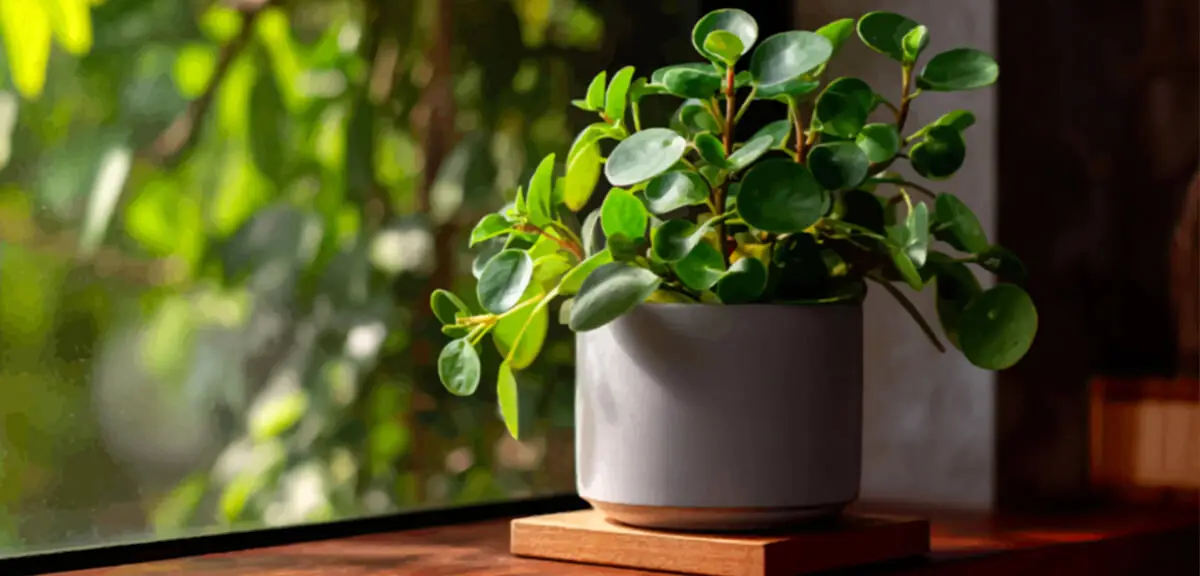
What does "low light" actually mean?
To put it simply, we can say that the space gets no direct sunlight. North-facing windows normally get no direct sunlight, so that makes them excellent for low-light plants.
Remember that sunlight from other windows can be shaded because of outdoor trees or shrubs, or even due to awnings, canopies or a porch roof. Or do you have curtains or blinds inside that might shield direct sunlight? What about that corner of the house or that table or shelf far from a window? These are all locations where plants that require little light will thrive.
Can you grow houseplants in a windowless office?
Want to bring a little greenery into your cubicle? Growing plants in a windowless cubicle or office with only artificial lighting is a bit of a challenge, but quite possible, as long as you have 8-10 hours of artificial light every day. By choosing low-light plants you can still have that bit of nature in a stark office.
Tip: How do you identify a low-light space? A simple test for low light: ask yourself, is it bright enough for you to read a book without turning on a light? If so, you’re good to go.
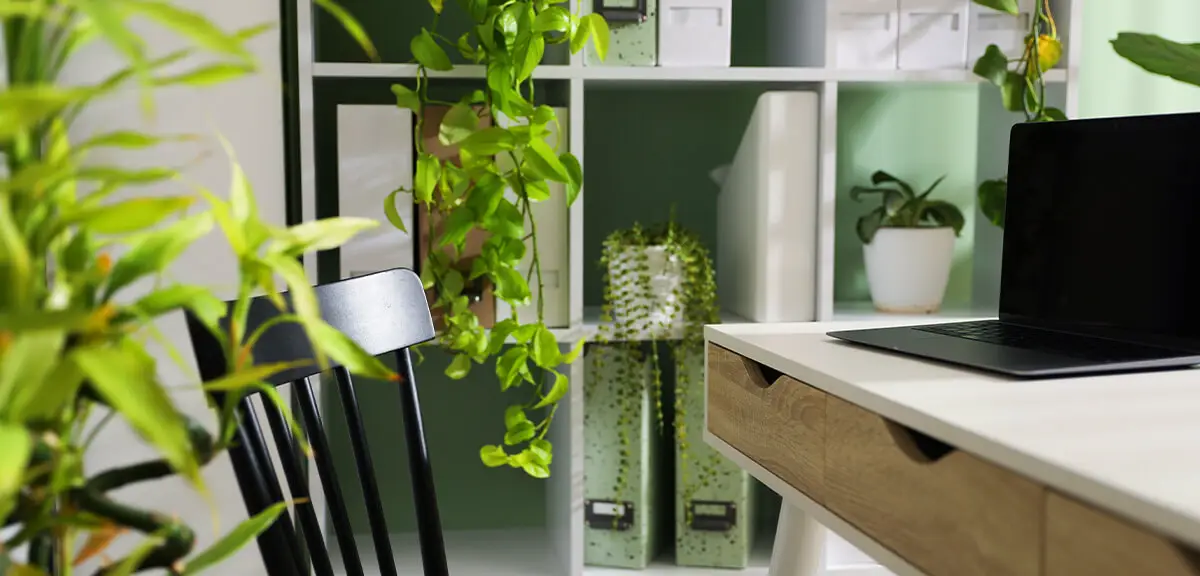
The 10 best plants for extremely low light
One might think that plants that survive in low light lack character. This is absolutely not the case. Many display beautiful variations in foliage colour, reach impressive proportions and can even flower, making them excellent options for any desired effect.
| Plant | Light tolerance | Mature height |
| ZZ plant | Low light | 60-120 cm (24-48”) |
| Snake plant varieties | Low light | 15-60 cm (6-24”) |
| Cast iron plant | Low light | 60-90 cm (24-36”) |
| Chinese evergreen varieties | Filtered light (low/medium) | 30-90 cm (12-36”) |
| Peace lily | Filtered light (low/medium) | 30-90 cm (12-36”) |
| Pothos | Filtered light (low/medium) | Vine plant |
| Heartleaf philodendron | Filtered light (low/medium) | Vine plant |
| Chinese money plant | Filtered light (low/medium) | 20-30 cm (8-12”) |
| Dracaena marginata | Filtered light (low/medium) | 45-120 cm (18-48”) |
| Spider plant | Filtered light (low/medium) | 30-60 cm (12-24”) |
How to care for low-light plants
Plants that tolerate low light add a touch of greenery to rooms that might otherwise lack vibrancy, and they’re very easy to care for.
How does low light affect watering frequency?
Low-light plants tend to grow more slowly than if they were located in brighter spots. Because of this, these plants tend to take longer to dry out and need a little less water. Be careful not to overwater, as this is the most common plant parent mistake. Use the finger test or lift the pot to check its weight and see whether it needs watering. Most of these plants want the top 2.5 cm (1”) of the potting mix to be dry before watering.
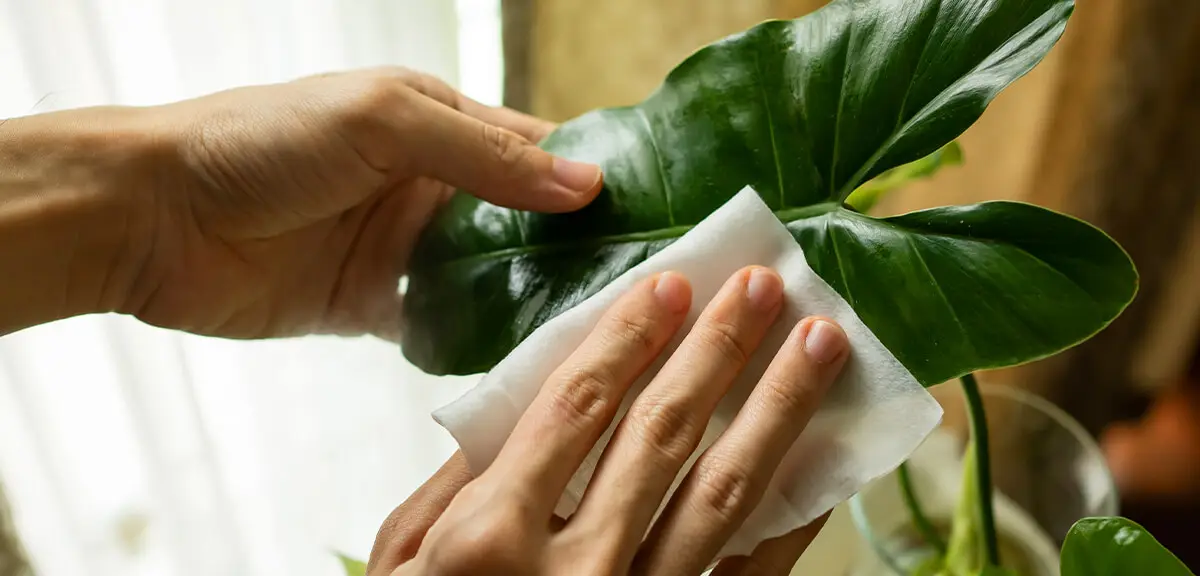
Should you still fertilize low-light plants?
Fertilizing your low-light plants each time you water them using Schultz All Purpose Liquid Plant Food is the uncomplicated way to remember feeding your plants. At 7 drops per litre of water, you are giving a diluted nutrient dose each time and won’t have to worry about overfertilizing.
Can a grow light compensate for low natural light?
If the place is considered not bright enough, think about using some artificial light in that corner. The type of light that you use matters. The best light source is a grow light that mimics sunlight. The second-best light source is the standard LED light. The third-best option is the fluorescent type.
Keep in mind that all plants require a rest from light every day to recharge overnight. If you like, you can set a timer that shuts off the grow light to ensure that your plants get 8-10 hours of rest time every day.
Signs your low-light plant isn't getting enough light
Your plant will tell you if its light levels aren’t right. Any of these symptoms might be from too little light, but be aware that another cause might also be to blame. Look for:
- Older leaves dropping, with fewer and smaller new leaves emerging.
- Variegated leaves losing the variegated characteristics.
- Leaves turning yellow.
- Plants getting spindly, leggy and stretched towards a light source.
- No new growth in spring and summer.
- Flowering types not flowering.
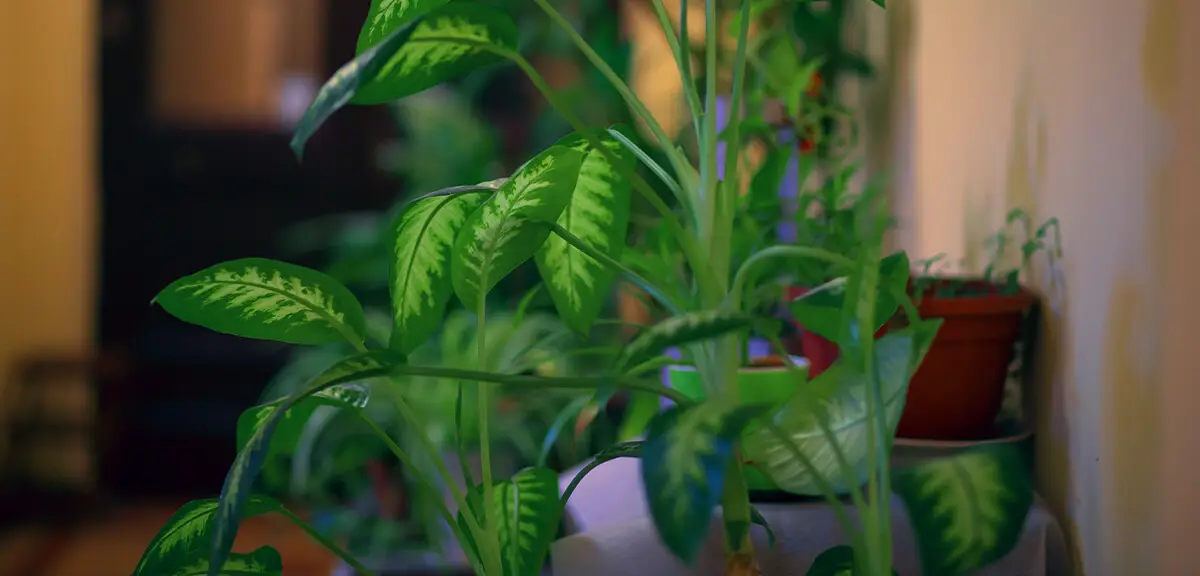
What you need to know to properly care for your plants
Remember that there are houseplants out there that will survive and thrive in your low-light conditions. Keep in mind, however, that they generally require slightly different care. With less light, your plant will typically dry out more slowly. Therefore, you'll need to carefully monitor the soil moisture level to avoid overwatering. Its growth will also normally be slower. To prevent weak, spindly stems, avoid overfertilizing by using our All Purpose Liquid Plant Food.
