
How to care for a fiddle-leaf fig (Ficus lyrata)
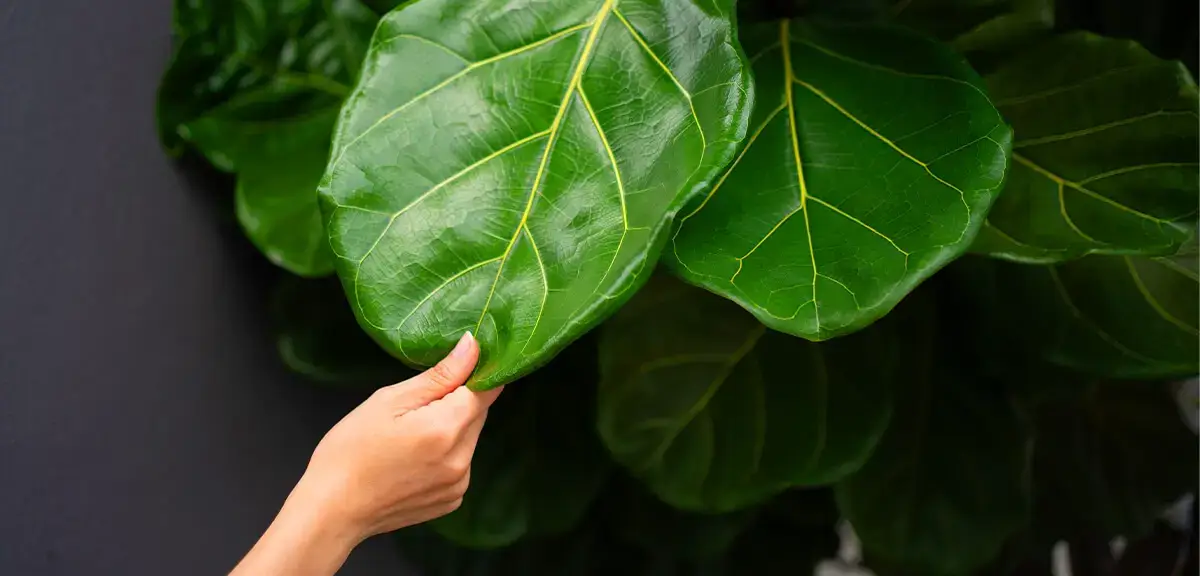
The fiddle-leaf fig is native to the western African rainforests and is a magnificent plant, delivering a stunning visual impact with its oversized green leaves. This plant is actually a small tree and it adapts fairly well to indoor conditions near a window. Although it's a popular houseplant, it does require
a bit more care and attention than most.
If you give it a good potting mix, regular watering, fertilizer and proper light, your fiddle-leaf fig will thrive. If not, the fiddle-leaf fig can be a little temperamental and drop some leaves until you pay attention! Here’s how to look after your plant to keep it happy.
Why is it called fiddle-leaf fig?
Well, it is actually a type of fig tree but not the same as the type that grows edible figs. It’s named “fiddle-leaf fig” because its leaves are similar to the shape of a fiddle. These plants can be both tricky and rewarding to keep.
What is the lifespan of a fiddle-leaf fig?
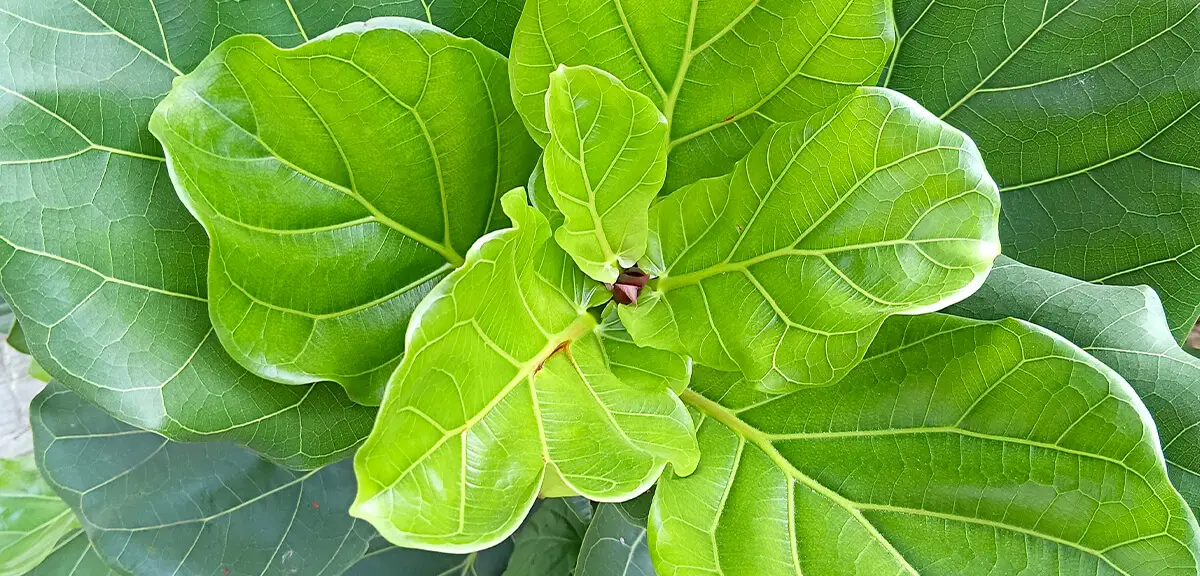
With proper care, your fiddle-leaf fig can live up to 50 years or even more. It grows reliably and quite quickly. When grown indoors, a Ficus lyrata can reach a height of 2 to 3 metres and a spread of one metre, making it one of the largest houseplants.
This impressive size is no surprise, since in its natural habitat in West Africa, this ficus is a large tree measuring 12 to 15 metres, sometimes more. Its trunk can also reach several tens of centimetres in diameter, and its leaves can measure between 20 and 38 cm long and up to 25 cm wide.
How to keep a fiddle-leaf fig happy?
The first thing to know is that fiddle-leaf figs like to grow in temperatures that range from 18-30 °C. Be consistent in the air temperature: avoid placing your plant beside an air conditioning vent or near a heat register or fireplace, or by an open window.
How can you know that the emplacement is not right? Your fiddle-leaf fig will drop leaves to let you know it doesn’t appreciate temperature fluctuations… Be aware that leaf drop can also indicate inappropriate temperature or light conditions. Try to locate your plant somewhere else and see what happens!
Do fiddle-leaf figs need sun or shade?
Don’t stick it in a dark corner! This plant needs lots of bright ambient light. Position it right in front of an east-facing window, which will give some soft direct morning sun and lots of indirect light the rest of the day.
If you want, you could place the fig tree close to, but not up against, a south- or west-facing window. The plant shouldn’t be subjected to hours of hot direct midday sun. Avoid north-facing windows, as fiddle-leaf figs won’t thrive in low light conditions. If low light locations are the only available spots, you’ll need a grow light.
What does an overwatered fiddle-leaf fig look like?
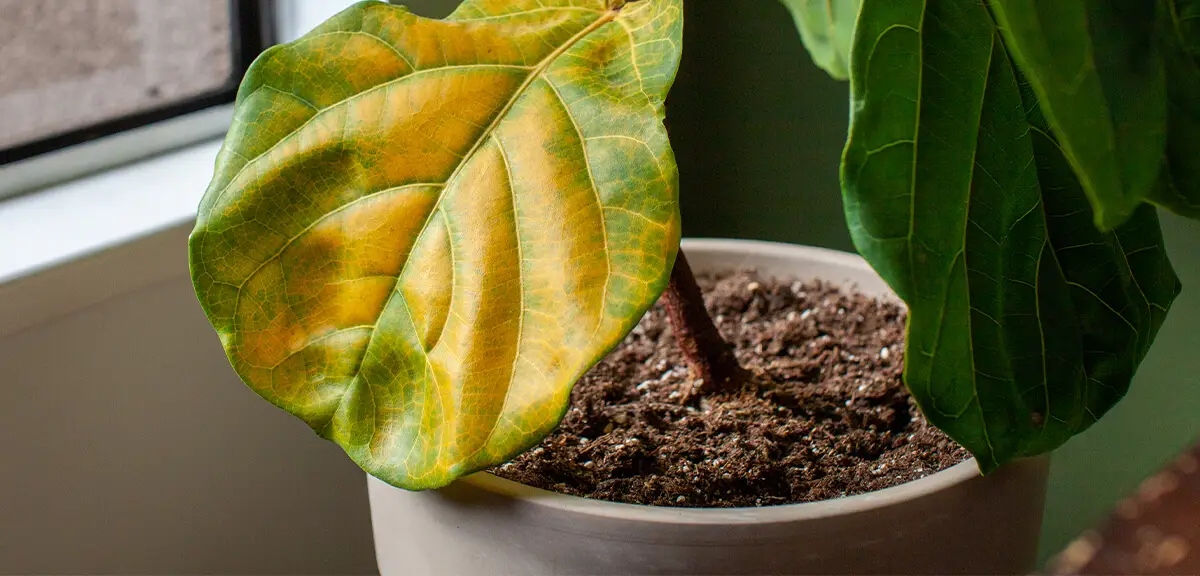
The fiddle-leaf fig is more tolerant of a slight drought than it is of excessive moisture. Too much moisture in the soil can lead to root rot and cause leaves to drop. Water it thoroughly whenever the top 5 cm (2”) of soil has dried. Allowing the soil to dry too deep, down to the lower root system could lead to leaf loss. Empty the excess water that accumulates in the drain dish.
The fiddle-leaf fig can be a thirsty plant and may need frequent watering. It likes its soil to be kept consistently and evenly moist with a brief drying period between waterings. As with all houseplants, try to use room temperature water, as cold water is a bit of a shock to the roots.
Should I mist my fiddle-leaf fig?
Misting is a good idea but remember that it only fixes the problem temporarily. This plant thrives in 35%-45% humidity as found in most households, barely tolerating below 30% humidity levels or levels over 65%. If it’s too dry in your home, place a humidifier or arrange a humidity tray with pebbles.
Fertilizer: how to encourage fiddle-leaf figs to grow taller?
Like with all houseplants, fertilizing is recommended when the plants are actively growing from spring until late fall. Let the plant rest during the winter months.
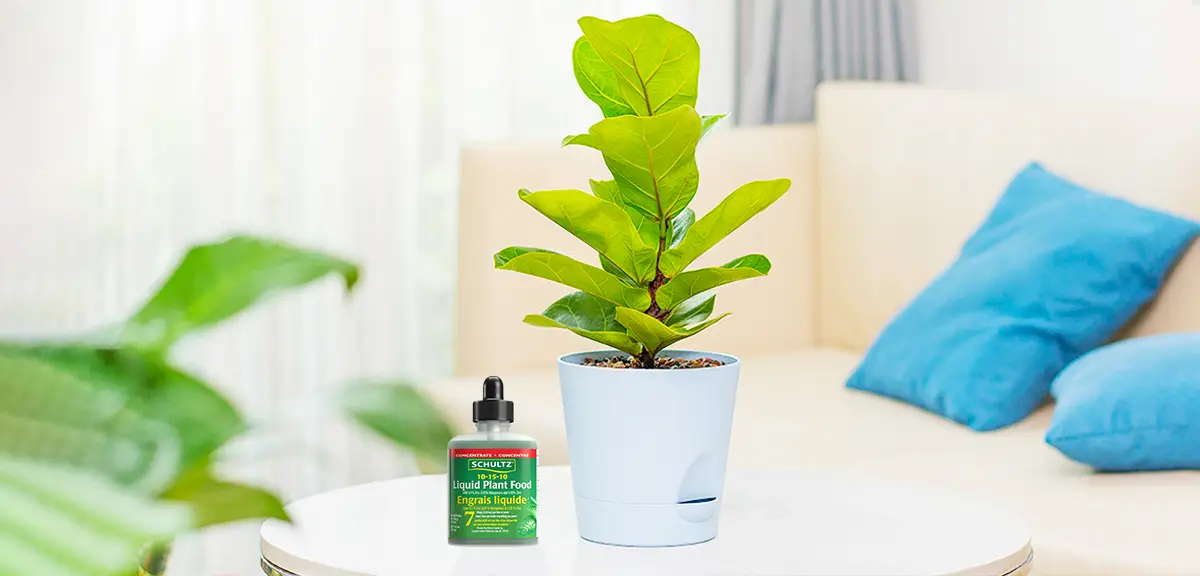
Look for a balanced high nitrogen soluble or liquid fertilizer that can be added in the watering can.
Schultz All Purpose Liquid Plant Food 10-15-10 is designed for leafy houseplants like the fiddle-leaf fig. Feed once or twice a month.
How to propagate a fiddle-leaf fig from cuttings
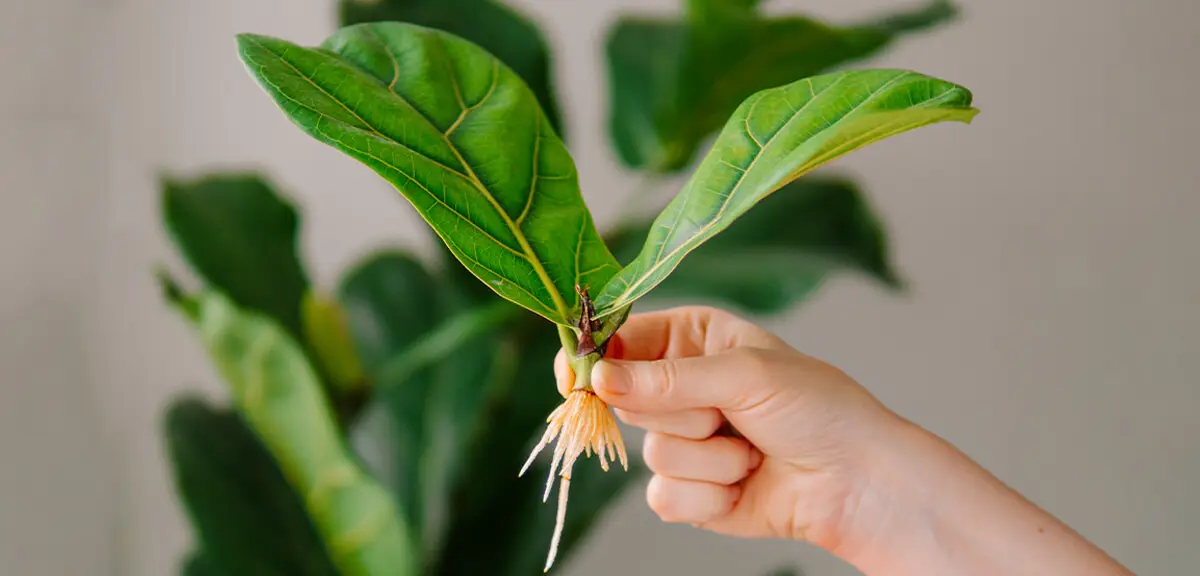
The fiddle-leaf fig is surprisingly easy to propagate — whether you want to multiply your own plant or share one with a friend. Start by selecting a healthy branch with at least three leaf nodes. Make your cut at a 45-degree angle just above a node, then remove the bottom leaves, leaving one or two at the top of the stem.
Water propagation vs. soil propagation: which is better?
Both methods are effective, so the choice comes down to personal preference. For water propagation, place the cutting in a clear jar with a few inches of water, making sure the nodes are submerged and the foliage stays above the waterline. Set the jar in a spot with indirect light and top up the water every few days. In 6 to 8 weeks, you should start to see roots forming. Once they reach 1 to 2 inches long, transplant the cutting into a pot with fresh, well-draining potting soil, water deeply, and place in bright, indirect light.
For soil propagation, insert the cutting directly into a pot filled with well-draining potting mix — dipping the end in a liquid root stimulator first can give it a head start. Use a pot at least 15 cm (6") in diameter with drainage holes. Firm the soil around the base to keep the cutting upright, then cover loosely with a plastic bag to retain humidity. Place in a warm spot with bright, indirect light. After about two weeks, gently tug the cutting. If you feel resistance, roots are forming.
Do fiddle-leaf figs like deep pots?
With good light, watering and feeding care, it’s normal for your plant to outgrow its container rather quickly. Young plants will need repotting every year. Do this in the spring. Go up one pot size, adding fresh potting mix to fill the pot each time. It is important to use a potting mix that allows for proper porosity, good water retention and a correct fertilizer charge, like Schultz Potting Soil plus.
Are fig plants toxic to cats and dogs?
Ficus lyrata can cause oral irritation, vomiting and diarrhea if consumed, so it is mildly poisonous to pets. Keep the plant out of your pets' reach and get advice from your veterinarian if your pet chews on or consumes it.
So, is a fiddle-leaf fig high maintenance?
The answer is yes, but there are a few things you can do to help it be at its best.
- Every time you water the plant, rotate it to give it even light exposure so one side won’t be growing drastically more than the other side.
- Use a damp cloth to lightly clean the leaves when dust accumulates.
- Prune out any dead or yellowing leaves and their stems. If it gets too big, you can prune your plant to maintain its shape and size.
Fiddle-leaf figs are especially vulnerable to changes in their surroundings. When bringing a new plant home, it will probably take some time for it to get used to the change of environment. Don't worry if your plant loses a few leaves. Just make sure you follow the maintenance guidelines.
Struggling with your fiddle-leaf fig? Check out our fiddle-leaf fig problem and issue guide for solutions to the most common concerns.
