
What to know before buying a houseplant: our beginner's checklist

Is it possible to be a new plant parent without having a green thumb? Of course! It’s entirely feasible to not only find a potted plant that is low maintenance, but one that can fit into your home and your lifestyle.
What makes a good fit
Houseplants add warmth and personality to any space. Their presence alone can make a drab room look alive. Besides offering a bit of natural beauty, many houseplants help in filtering airborne contaminants, like formaldehyde and xylene, as well as exchanging the carbon dioxide in your room with fresh oxygen. What’s not to love?
Buying your first houseplant is an exciting venture, but it needs a little more thought than simply picking the first pretty plant you see in a store. Not to worry, there are dozens of houseplants available that will fit your specific situation. Some houseplants originate under the canopy of tropical forests, while others come from dry areas, like deserts. Understanding where your future houseplant comes from will dictate different light and water needs. It’s just a matter of matching the right plant to your environment.
These are the points you need to consider.
1. Assess your light intensity before choosing your plant
Many people make the mistake of placing their plants in areas with either too much or too little light. Start by knowing where you think you want your plant to be placed. It’s smart to know how intense the light is and how long your plant will receive it before you buy.
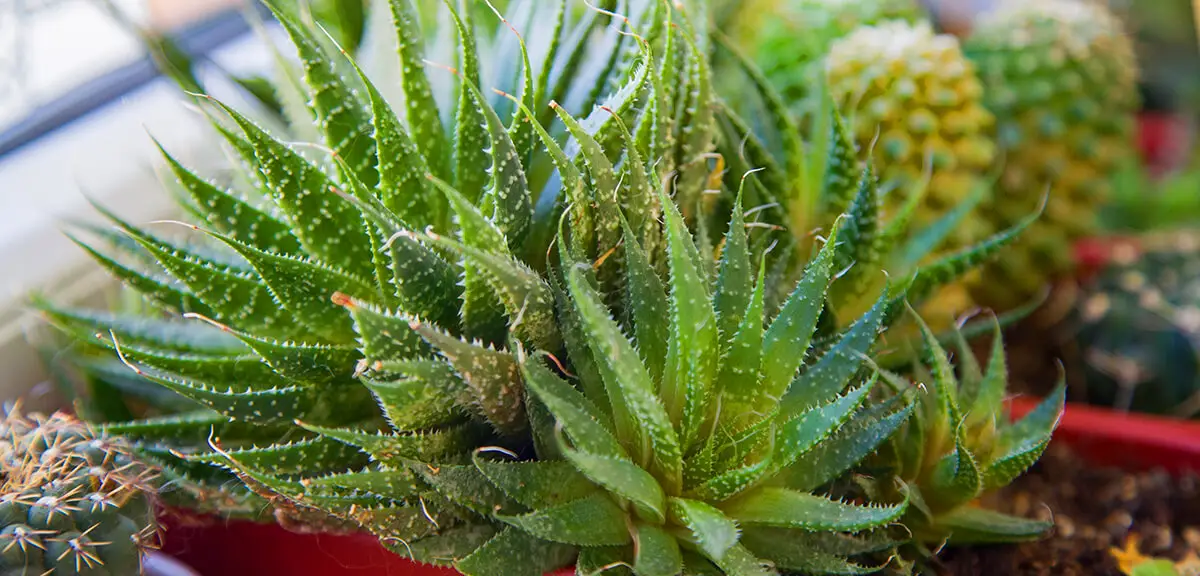
A plant placed next to a south-facing window with no obstructions will get six or more hours of direct sunlight, which is generally suitable for desert-type plants only (like cacti and succulents). The leaves of many tropical plants will scorch under such intense light.
That intensity changes if a window has its sunlight obstructed outside by trees, canopies or buildings, or inside by curtains and blinds. Just keep in mind that when talking about east-, south-, west- and north-facing windows, the light intensity can be different based on obstructions.
Bright indirect light is what most tropical plants prefer. You’ll find that a normal west-facing or east-facing window will give bright, indirect light all day. Near an east- or west-facing window, you might find that spot for your plant could be getting some direct sunlight for a few hours a day. The sunrays are weaker from the morning sun in the east-facing window, but stronger in the west-facing window. A north-facing window usually has no direct sunlight but is quite appropriate for low-light plants. Even a south-facing window with obstructions or sheer curtains might be suitable for providing bright, indirect light.
Pick the spot that you want for the new plant before shopping and just check at various times of the day what the light level is going to be like.
2. Match the plant to your lifestyle
How much time can you realistically dedicate to plant care? Matching your level of willingness to care for a houseplant will help in your selection. Are you at home on a regular basis, or are you away a lot? Does plant care fall into your nurturing qualities or will it be a chore? Low-maintenance plants can get by with minimal care. Finicky plants need nurturing plant parents. Before picking a plant, decide on what kind of attention you plan to give it.
If your lifestyle limits time and effort, there are many plants that don’t require as much attention and will continue to thrive despite your part-time care. Low-maintenance houseplants can provide even those with no gardening experience an opportunity to develop an indoor oasis if they want.
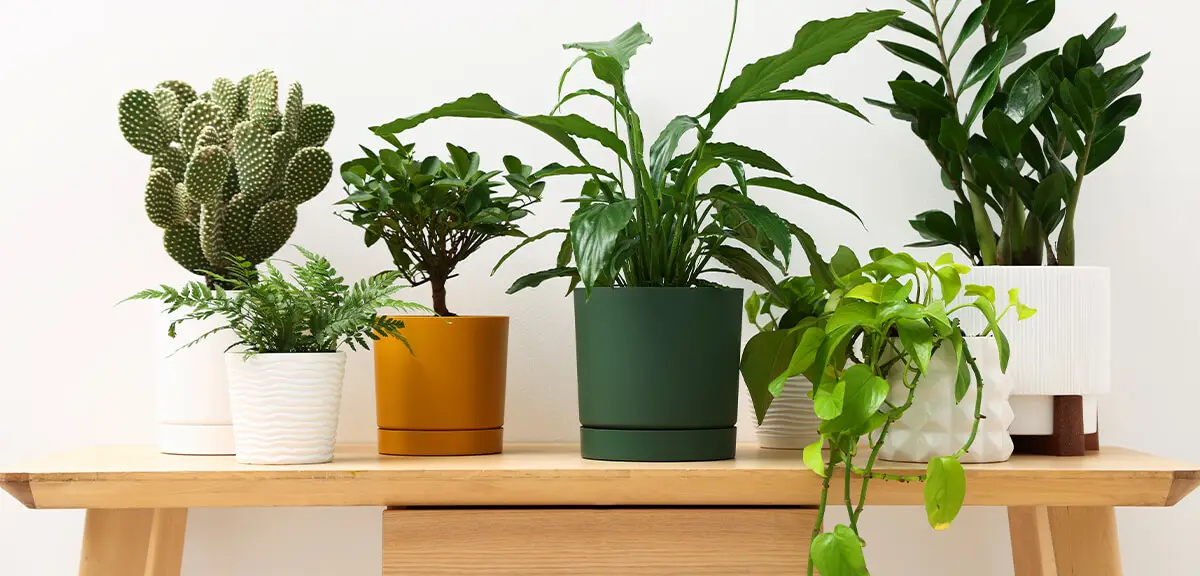
Do you have pets or young children at home? Pet owners and the parents of young children know that cats, dogs and young kids can be curious when it comes to plants. They want to play with the leaves, stems or flowers of houseplants. In doing so, they sometimes put parts of the plant in their mouth. Be aware that some plants are toxic when ingested.
Check the ASPCA website for a list of pet-friendly houseplants. Otherwise, use raised planters or hanging baskets indoors to keep plants out of reach.
3. Learn how to read a plant tag and where to look for more information
This is an important part of purchasing a houseplant. The tag that comes with the plant will give a basic idea of light levels and watering needs. The tag will also show the eventual height and width of the houseplant as it grows. Plants in a 4-inch pot at the store look small, but some grow to be quite formidable. If all you have is a windowsill for placement, stick to a size that will work for you later on.
But this is just a start. Unless your new plant comes with a care pamphlet, there’s no way to fully include all the care needs on a little tag. It’s a great idea to do follow-up investigation to really understand the needs of each individual plant. Or better yet, research before shopping so you are focused on exactly which plant is best suited for your setup.
Don't believe everything you read on the internet or see on social media. Trust experts like us who can give you practical tips that will make your life easier while ensuring your plants thrive.
4. What to look for when inspecting a plant before buying
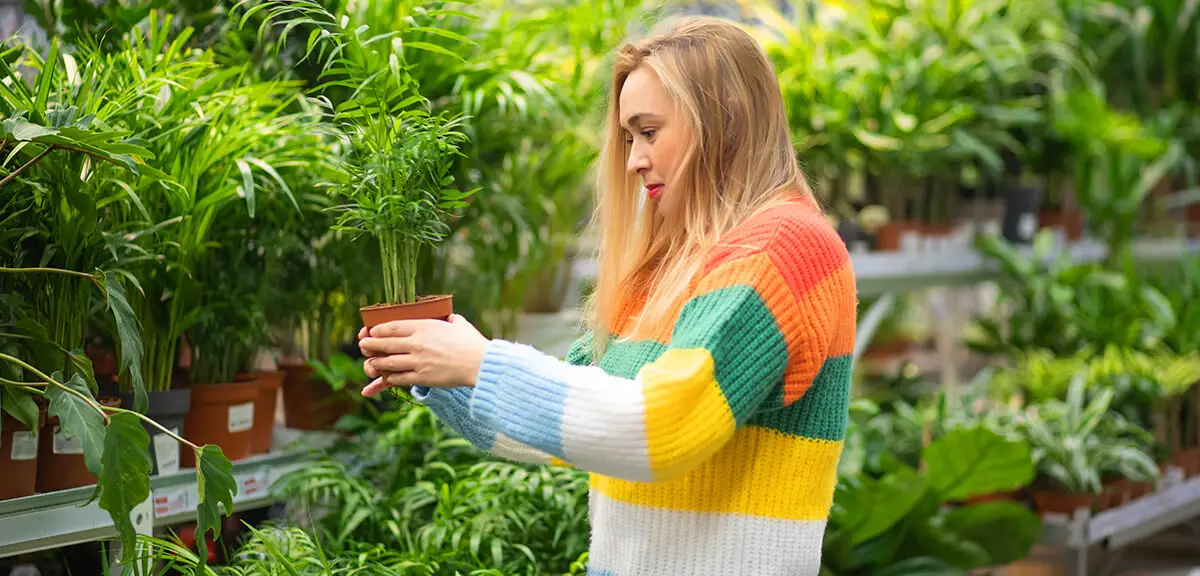
On the store rack or shelf, there’s usually a selection for each plant offered. Go for the healthiest-looking one. It doesn't have to be the biggest one. You want to begin with a hardy plant, not start by nursing a stressed one back to health.
A healthy plant should have lots of strong new growth. The plants should display bright green leaves, and if variegated, lots of colour. If you are looking at a flowering plant, pick the one that hasn’t flowered yet, but has many unopened flower buds ready to burst.
Red flags to walk away from
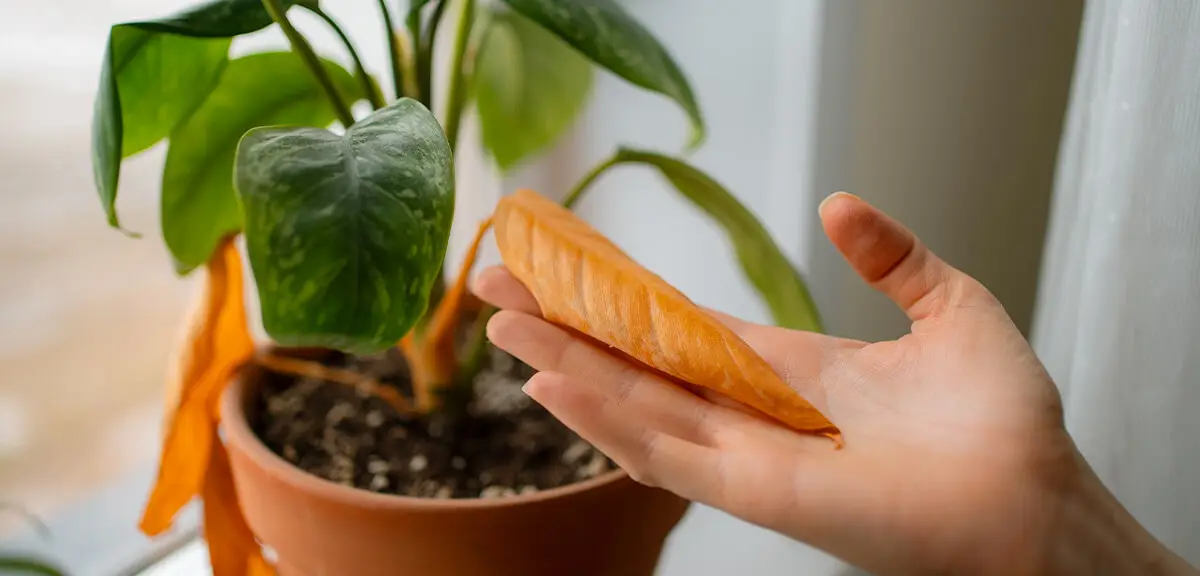
Questionable leaves: Any plant that has limp, wilted, yellow, brown or black leaves is having a tough time. It may be overly dry, too wet, receiving too little light, suffering from disease or pests, or root-bound. All fixable issues, but why bring back problems.
Insects: Look for signs of bugs. Houseplant bugs are small and often hard to spot, but they do leave obvious clues:
- white, cottony dots = mealybugs
- fine webs = spider mites
- sticky residue = aphids or scale insects
- tiny black flies flitting around the surface of the potting mix = potting mix kept too wet
Spongy stems: If the stems at the base feel soft or mushy, this is a clue to root rot.
Root-bound: If you see roots sticking out of the drainage holes. Being root-bound isn’t always bad if the plant is otherwise healthy. It just means that you’ll have to repot it soon after you get home.
5. What to do the day you bring your plant home
Your first houseplant requires just three simple steps: find the right spot with proper light, check the soil moisture before watering, and wait a few weeks before fertilizing or repotting. Give the plant time to adjust to your home’s light and humidity. Place the plant near a window that matches its needs. Keep it out of drafts and away from heat or AC vents. Check the moisture level of the potting mix. Water when the top 2.5 cm (1”) feels dry.
At some point, after your plant has acclimated to your home, you can start fertilizing using Schultz All Purpose Liquid Plant Food. Just add 7 drops per litre every time you water.
If your plant is root-bound or if the potting mix looks old (it crumbles and has a dusty texture), you can size up one pot and refresh it with Schultz Potting Soil. This will permit the roots to stretch out a bit, which will generate better top growth.
Tip: If you are bringing home a new houseplant during winter months, make sure to cover the plant to shield it from the cold as you transport it home.
Ready to take on your role as a plant parent?
The three criteria to consider when purchasing a new houseplant are the level of light you can offer it, the time you will have to dedicate to it and if you need to worry about children or pets who may become overly interested in your new acquisition.
Learning about the plant before buying it will ensure that you make the best choice for yourself and your home. Schultz is a good place to start when you are looking for information. If your new plant is causing you some concern, you will find answers to your questions about the required care on our website.
