
Monstera deliciosa: identifying and solving common problems

Affectionately nicknamed the "Swiss cheese plant" due to its distinctive leaves featuring natural cutouts, the Monstera deliciosa is undoubtedly a current favourite.
Although it has a reputation for being relatively easy to care for, the Monstera deliciosa does have specific needs, making it important to understand the plant's requirements.
Here is how to spot the signs and resolve issues that may arise when your plant's fundamental needs aren't being met.
Early signs that a monstera is struggling
The first indications that something is wrong with your monstera will appear on the leaves: wilting, curling edges, yellowing and drying or browning edges.
While these signs are clearly visible and seem straightforward, they can stem from various causes that need addressing. Proper lighting, controlled watering, adequate humidity and well-draining soil are all key factors that make the difference between a plant that merely survives and one that truly thrives.
Yellow leaves: causes and solutions
This is a warning sign! Your plant is signaling a problem: too much or too little water, lack of light, an insect infestation, or a need for fertilizer. Here is how to investigate the issue.
- Check the soil moisture and adjust your watering accordingly.
- Ensure your monstera is getting enough light and adjust the lighting if necessary.
- Look for indoor pests—such as thrips, fungus gnats, mealybugs, spider mites, aphids, etc.—and treat the problem with our insecticidal soap.
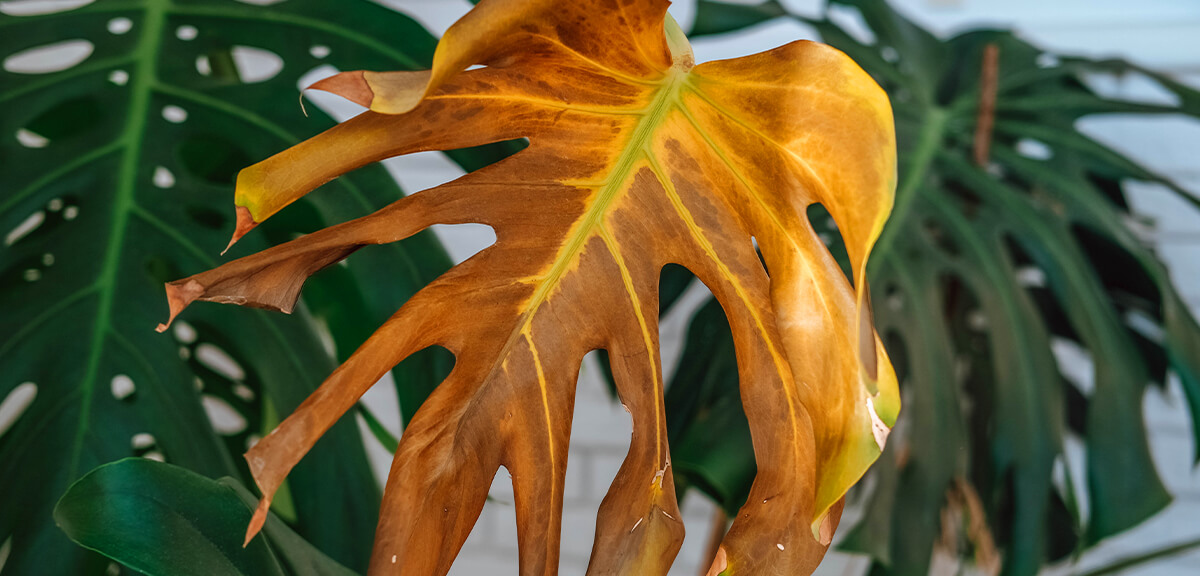
If the yellowing leaves aren't caused by any of the issues mentioned above, it is likely a nutrient deficiency. It is time to use fertilizer.
Tip: Old or yellow leaves provide the plant with nutrients. It is recommended to let them slowly die off on their own. You can remove them when they are completely yellow or even fall off on their own. The plant will decide when to remove the leaves because they are older. It is part of its process.
Curling, browning or drying leaves
While curling leaves indicate that your monstera needs water, leaves turning brown usually signal excessive exposure to direct sunlight. Move your plant to a spot where it will receive bright, indirect light.
If the leaf edges are turning brown, the air is likely too dry. Use a humidifier to increase humidity levels. If your plant is still small, you can also place it on a pebble tray.
Stress from repotting or moving
A monstera can become stressed when moved or repotted. This is unavoidable, as monsteras require regular repotting. The plant will temporarily stop growing, and some leaves may wilt. This is normal. Simply wait for it to recover.
Pests and fungal diseases
Although the monstera is generally resistant to pests, stay vigilant—especially regarding mealybugs. If you spot insects, treat your plant with our insecticidal soap. Keep in mind that mealybugs are tough pests, so more than one treatment may be required.
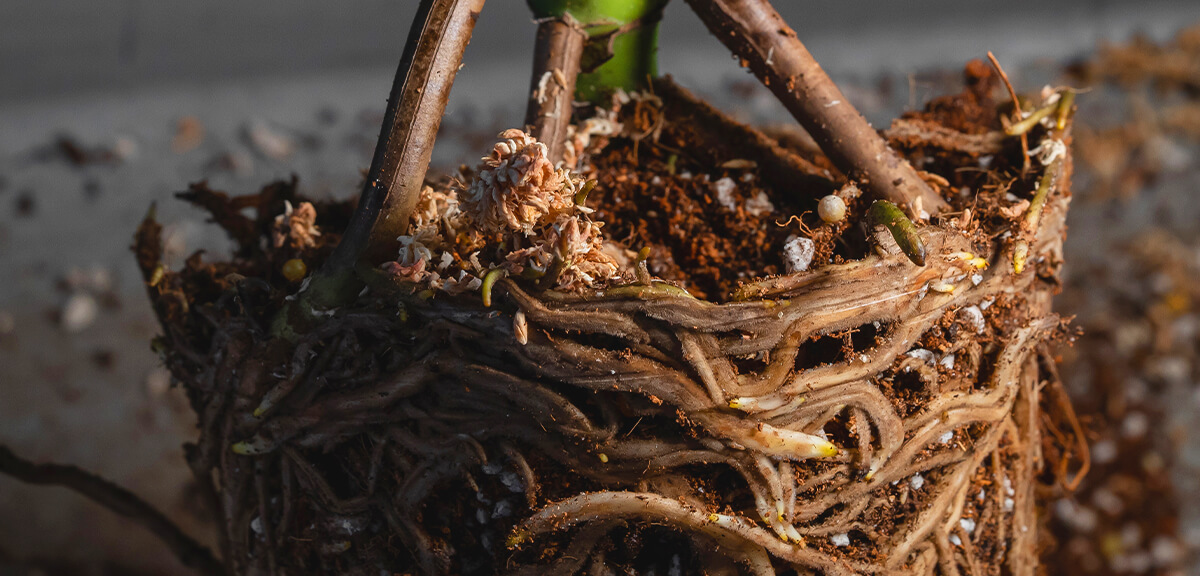
The biggest risk for a monstera is root rot caused by overwatering or poor soil drainage. Be sure to use a high-quality potting mix that offers excellent drainage, such as our potting mix. If you notice water pooling, repot the plant and take the opportunity to check the condition of the roots.
A healthy root system features firm, whitish to cream-coloured roots with no smell of decay. Remove any diseased roots before repotting your plant.
Easily avoidable problems
Caring for a beautiful Monstera deliciosa starts with understanding its needs. Most of the problems mentioned in this article stem directly from improper care. The good news is that they are often easily avoided!
To learn more and give your plant the best chance of thriving, check out our reference guide on caring for a healthy Monstera deliciosa.
