
How to care for a Chinese Money Plant (Pilea Peperomioides)?

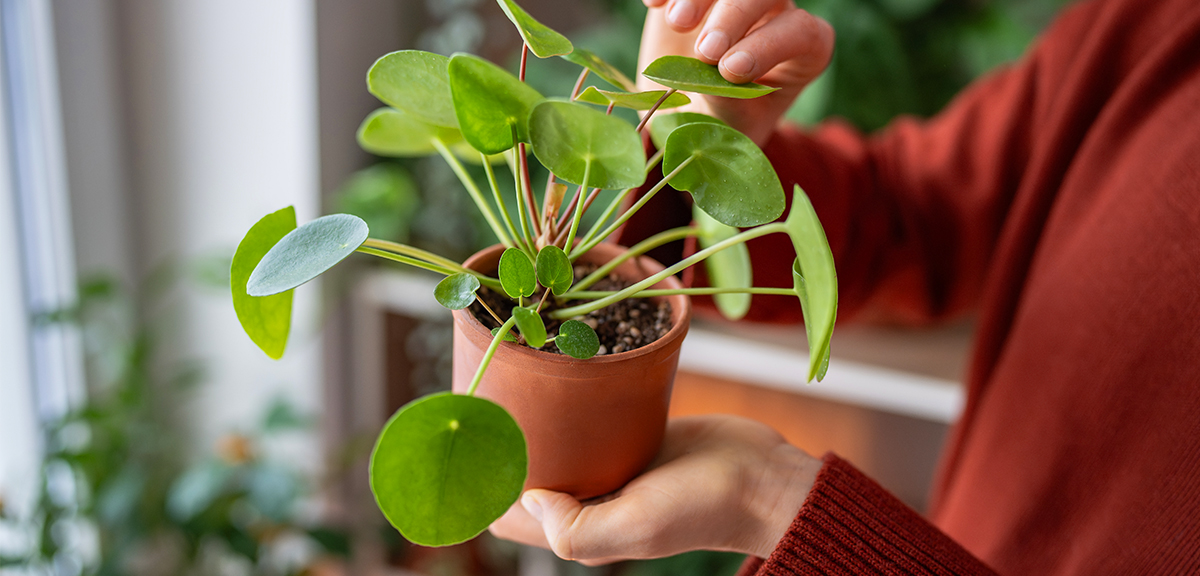
This popular houseplant is considered one of the easiest plants to grow. It is perfect for new plant parents! With its round leaves, its speed of growth, its capacity to produce babies to share with friends and its ability to tell you when to water it, the Chinese Money plant has become a must have favorite.
Why is it called a money plant?
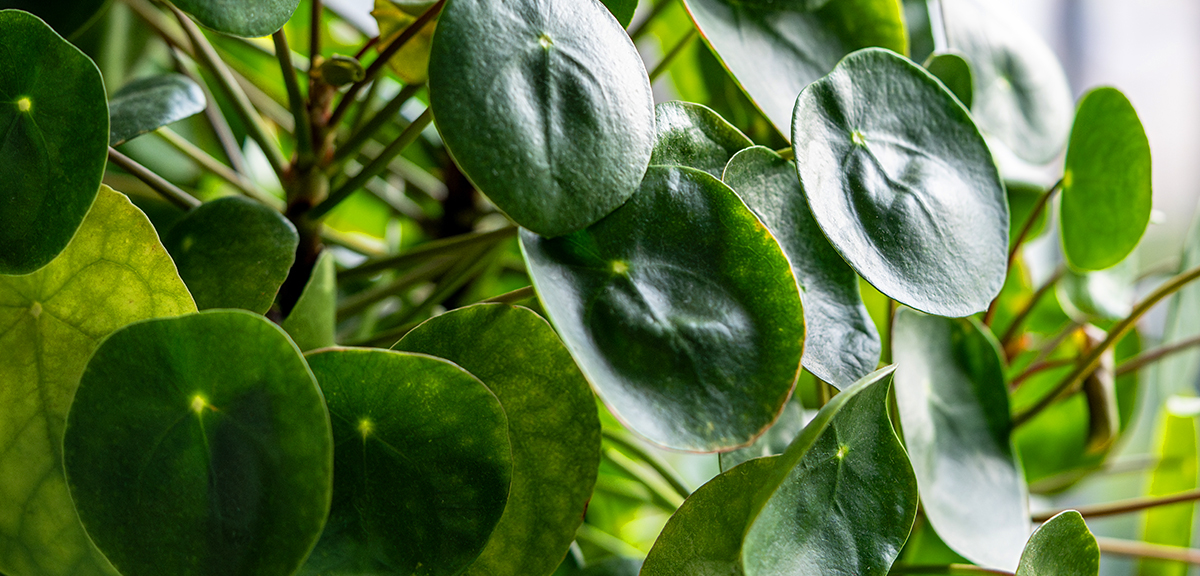
As the name suggests, the Pliea Peperomioides is native to China, growing amongst rocks in the mild climate of the Himalayan foothills. The Money moniker is due to its round, flat leaves that resemble coins.
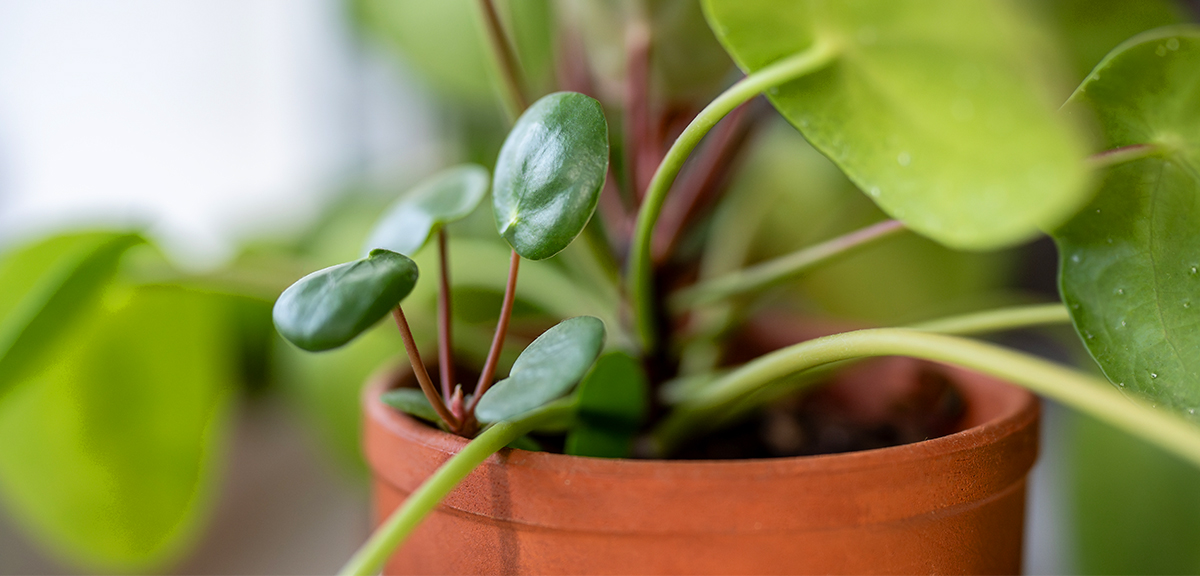
It has many other names besides the Chinese Money plant: Pancake plant, UFO plant, Coin plant and Friendship plant. The Friendship name comes from the fact that it is easily propagated. The plant produces babies, called "pups", at its base that can be separated and grown into new plants and shared with friends.
Does Chinese Money Plant bring good luck?
In Chinese culture, the money plant is associated with good fortune and financial prosperity. It was initially believed to bring good luck, money and fortune to the household.
Queen of low maintenance
Just give it bright indirect light and water and you are good to go. These are very expressive plants, as it’ll let you know when it’s time to water it, by drooping its leaves, and then bouncing them right back after quenching its thirst. These plants are known to have air-purifying qualities. And it’s nice to have a plant that is in a hurry to grow!
How long do Chinese money plants live?
When grown indoors, and under ideal conditions, Chinese Money Plant can live for approximately 5 years. This is a small plant that grows to about 30-45 cm (12-18”) in height and width.
How do you take care of a Chinese Money Plant indoors?
Light: Where is the best place to put a Chinese Money Plant?
The Chinese money plant thrives best in bright indirect light. Avoid a spot that has hours of south facing direct sunlight since this will scorch leaves. If you must place it in a south window, pull it away from the window to a spot away from direct sun.
Good to know: Chinese Money Plants can survive in low light, but they won’t grow as fast or as full.
Tip: You should rotate the plant regularly, so the growth is even on all sides.

How to tell if a Chinese Money Plant needs water?
The Chinese Money Plant will droop its leaves when it is thirsty. Because it grows so fast, you will need to water often, but do not overwater. It prefers slightly moist soil, but you need to allow the top 2.5-3 cm (1“ or so) to dry out before re-watering. As with all houseplants, try to use room temperature water, as cold water is a bit of a shock to the roots.
Note that the money plant is considered a succulent! Avoid overwatering it!
Tip: Overwatering leads to yellowing leaves and other problems. Empty the excess water that accumulates in the drain dish.
Temperature and Humidity: What makes a Money Tree happy?
Although the Chinese Money Plant is an easy plant to keep, there may be some issues if its basic needs aren’t met.
This plant likes to grow in temperatures that range from 16-24 C (60-75 F). It will survive in colder temperatures as low as 10 C (50 F) but prospers in warmer temperatures. Be consistent in the air temperature: avoid placing it near a heat register, a fireplace, the air conditioning or an open window during winter. Keep your Money Tree away from drafty doors, cold windows, or blasting vents!
The Chinese Money Plant thrives in normal house humidity, between 40-60%. Place a humidifier or humidity tray with pebbles if it’s too dry in your home. Misting is also a good idea.
Tip: Bathrooms make a good place for this plant during the winter months when house humidity may be lower.
What fertilizer to use for Chinese money plants?
As with all houseplants, fertilizing is recommended when the plants are actively growing from spring until late fall. Let the plant rest during the winter months.
Look for a balanced high nitrogen soluble or liquid fertilizer that can be added in the watering can. Schultz All-Purpose Fertilizer 15-5-5 is specially designed for leafy houseplants like the Chinese Money Plant. Feed once or twice a month.
Why is my Chinese money plant growing so tall?
At maturity, the pilea usually measures 30 to 40 cm in height. Under optimal conditions, however, it can reach 60 to 80 cm.
The Chinese Money Plant grows very fast. With the correct amount of light, it can double his size each year. To encourage fast growth, re-pot your plant in a pot that is 2-5 cm larger and fertilize regularly.
When to repot a Chinese Money Plant?
With good light, watering and feeding care, it’s normal for your plant to outgrow its container rather quickly. Young plants will need repotting every year. Do this in the spring.
3 Signs that tells it's time to repot
- The roots grow out of the drainage holes
- The dirt dries out very quickly, requiring frequent watering
- The plant produce many baby plants
Go up one pot size (2”), adding fresh Schultz potting mix to fill the pot each time. Make sure that there are drainage holes in your new pot. This is a good time to pluck out any “pups” that you may use to propagate new plants.
Tip: Consider using self-watering planters when re-potting, which uses a water reservoir and wick system to pull water into the potting mix. This provides a consistent moisture level, allowing plants to absorb water as needed and preventing both overwatering and underwatering.
How to propagate a Chinese money tree?
If you want to start a new plant from cuttings, for yourself or a friend, this plant can easily be propagated. Chinese Money Plants are one of the simplest plants to propagate as they grow their own babies (called pups) at the base of the mother plant.
Do this when the pups are at least 5-7 cm (2-3”) tall. Gently dig around the base of the pup to expose the root or stem that attaches it to the mother plant. Use scissors to sever the union as close to the mother plant as possible. Make sure you get some of the pup's roots with the cutting.
Water Method
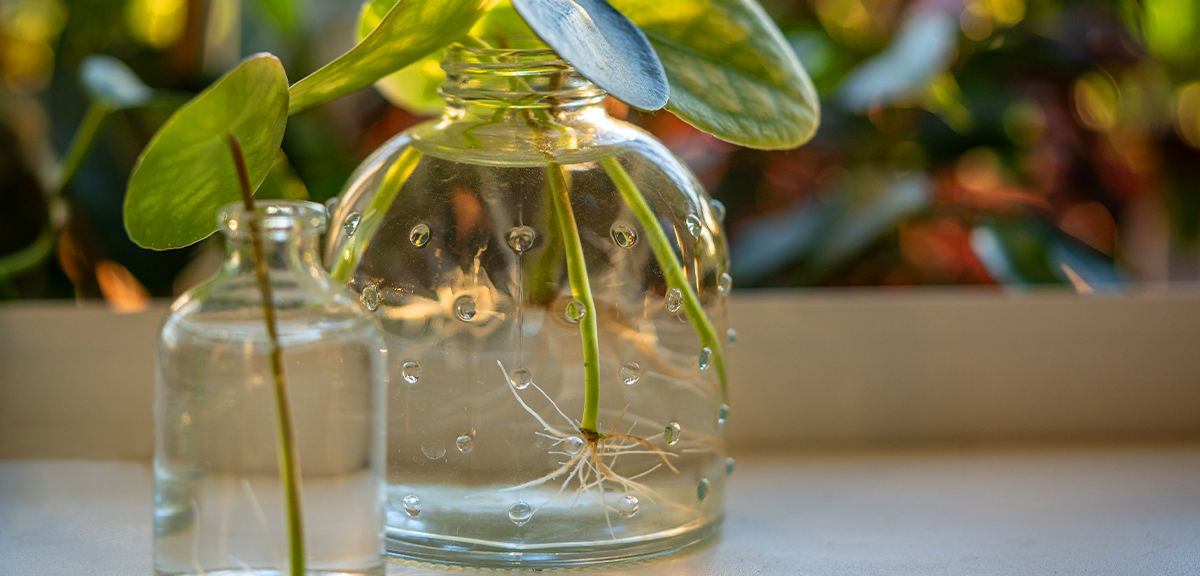
- Place the cutting in a clear jar with a few inches of water, ensuring the bottom is fully submerged.
- Place the jar in indirect light and top up the water regularly. After a few weeks, it should have enough root mass to transplant in a potting mix. Use a small 7.5-10 cm (3-4”) pot with drainage holes.
Potting Mix Method
- Use a small 7.5-10 cm (3-4”) pot with drainage holes.
- Dip the cutting in PRO-MIX ROOTS Liquid Root Stimulator.
- Insert it into a pot filled with a well-draining potting mix. You can also propagate directly into a seed starting potting mix, such as Pro Mix Seed Starting Mix.
- Firm the potting mix to keep the cutting upright and cover with a plastic bag. Place in a warm location with bright, indirect light. After a few weeks begin checking for root growth by tugging gently on the cutting. If you feel some resistance, then the roots are forming.
Is it better to propagate a money tree in water or soil?
Due to a lack of oxygen, nutrients, and stability necessary for growth, you get best results when you propagate Money Trees in soil from the beginning.
How to make a Chinese Money Plant bushy?
First piece of advice: do not prune the shoots, that's what gives the plant its bushy appearance!
Since this plant reaches out towards the light, it’s a good idea to rotate the pot after each watering to keep it upright and prevent leaves from pushing all sides. Note that plant collectors often prefer their pilea with a single stem, so don't panic if your plant isn't very dense!
Why is my Chinese money plant getting yellow leaves?
Basically, your plant is telling you that you’re doing something wrong. Too much water, too little water, lack of light, some insect issue or it needs fertilizer. It’s a signal for you to check and correct the problem.
How do you fix yellow leaves on a Money Tree?
Yellowing leaves usually are a sign of overwatering. Check your soil moisture and modify your watering schedule accordingly. Ensure your Chinese Money Plant is getting enough light and make the necessary adjustment.
The Chinese Money Plant is not prone to any specific pest, except maybe spider mites. Because your plant is growing indoors with other surrounding plants that may have insects, look for pests, such as thrips, fungus gnats, mealybugs, spider mites, aphids, scale, etc., and control the issue with Schultz Insecticidal Soap.
If the yellowing leaf issue is not from any of the above, then it’s probably nutrient deficiency. Time for fertilizer.
Why are leaves falling off my Chinese Money Plant?
Chinese Money Plant leaves can fall off due to over or under-watering, insufficient light, or environmental stress like temperature changes or drafts. Sometimes it's just shedding older leaves for new growth so this can be normal.
To be sure your plants thrive, check soil moisture, ensure bright light, and avoid sudden shifts.
How to fix brown leaves on a money tree?
It’s getting too much direct sunlight.
Why are the leaves on my Chinese Money Plant curling up?
It may be due to a lack of bright indirect light, excessively high temperatures, or too dry humidity. This issue can also be brought on by excessive or insufficient watering.
Why are the edges of my money tree turning brown?
Your room is too dry.
Is a money tree toxic to pets?
No. Chinese Money Plants are non-toxic and are safe to be around children and pets.
Why my money tree so hard to keep alive?
Root rot can be a common issue for Money Trees. It is caused by overwatering or insufficient drainage. Signs of root rot can be yellowing leaves, wilting, or a foul, damp odor coming from the soil.
To prevent it, make sure your Money Tree's pot has drainage holes, and never leave water in the saucer after watering.
To discover how to brilliantly care for your other plants, check out the other articles on our blog.
est to grow. It even tells us when it's time to water it.
