
How to care for pothos plant indoors?
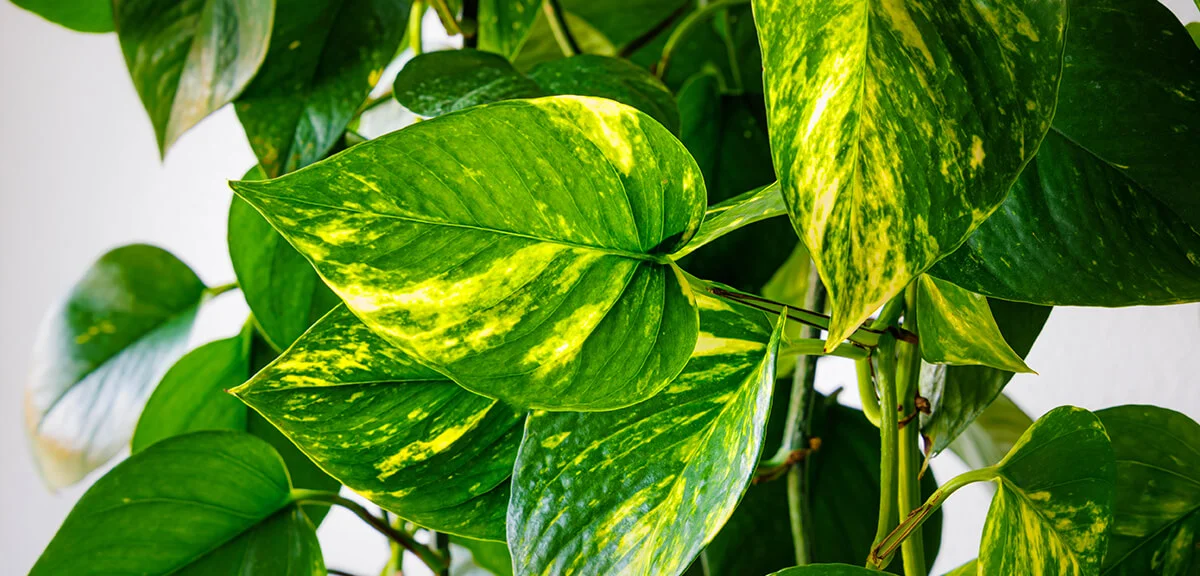
Pothos plants have glossy, heart-shaped leaves variegated with cream or gold. They tend to grow 30-45 cm (12-18”) a month and have an ability to produce cuttings quickly that can be planted back into the mother pot. You can let it trail down as a hanging plant, grow it upwards with a moss pole or trellis, or train the vines to stretch all along window borders.
How to make pothos climb?
In its native habitat, it earned the name “devil’s ivy” because of its growth habit in nature. Originating from Southeast Asia, Indonesia and the Solomon Islands, this trailing vine is known to overgrow forest floors and tree trunks, hence the name.
Restrained in a pot in your home, it is controlled and becomes a wonderful and easy plant to grow. But if you allow it to climb a support like a moss pole or trellis, your plant undergoes an amazing morphological shift, with much larger leaves and even fenestrations (splits) that make pothos look more like monstera.
Pothos lifespan: how long do pothos live?
In the worst-case scenario, the pothos, which can tolerate a wide range of conditions, can live at least 5 to 10 years. But as pothos plants are easy to care for, they usually live for decades, and as they can be propagated through stem cuttings, the genetic line of the plant is made to survive indefinitely.
Air purifier plants
The pothos plant is known to improve your air quality. It is effective at purifying the air of toxins like formaldehyde, benzene and carbon monoxide. One plant can’t do this for the entire house, but fill your home with these and other plants and you can make a difference to your air quality. Other popular air purifying houseplants are snake plant, peace lily, spider plant, aloe vera, Areca palm, English ivy. These plants absorb harmful chemicals through their leaves and roots, breaking them down in the soil, while also releasing oxygen, improving overall air quality and humidity.
Are pothos easy to grow?
Pothos plants are considered one of the easiest houseplants to grow. They adapt to many different light and humidity conditions. And compared to many slow-growing houseplants, you can watch pothos enlarge every month!
Can pothos grow in low light?
Pothos plants can adapt to most light conditions, including office environments with overhead lights. Although they prefer bright light and some direct sun, they can also deal with low light. These plants can survive in lower light areas, but in these conditions, the growth will be slower, and the leaves may lose some of their distinct colouring.
Ideally, your plant should be in a spot that is in or near an east-, west- or north-facing window. Remember that in its natural habitat, this is a plant that lives under the canopy of tropical trees. Avoid placing pothos in direct full sun all day, as this can scorch the leaves.
What do thirsty pothos look like?
Pothos plants will tell you it’s time to water when their leaves begin to droop. Don’t wait for the leaves to shrivel or turn dry. This is the signs pothos needs water. Water the plant whenever the top 5 cm (2”) of soil have dried, so usually every week or two during the growing season, or more if in a bright location. As with all houseplants, they prefer room temperature water. Water that is too cold shocks the roots.
Empty the excess water that accumulates in the drain dish. Overwatering this plant is the most common way to kill it!
Tip: If not attached to a wall, every time you water the plant, rotate it a quarter turn to give it even light exposure so one side won’t grow drastically more than the other.
Pothos temperature tolerance
Pothos plants thrive in normal household temperatures that range between 18 and 24 °C but can tolerate temperatures down to about 10 °C. Be consistent in the air temperature: avoid placing it beside an air conditioner vent or near a heat register or fireplace, or by an open window in winter.
Do pothos prefer high humidity?
Pothos plants will do fine in normal household humidity. However, they do enjoy higher humidity levels, so bathrooms and kitchens are great spots for them. You could place a humidifier near it. Misting leaves with room temperature water is not essential, but it is helpful, especially in dry homes.
What is the best pothos fertilizer?
Pothos need regular fertilizing as they are aggressive growers. Fertilize each time you water during the growing season, maybe less in fall and winter. Look for a liquid fertilizer designed for all houseplants, like our All Purpose Liquid Plant Food 10‑15‑10.
When to repot pothos
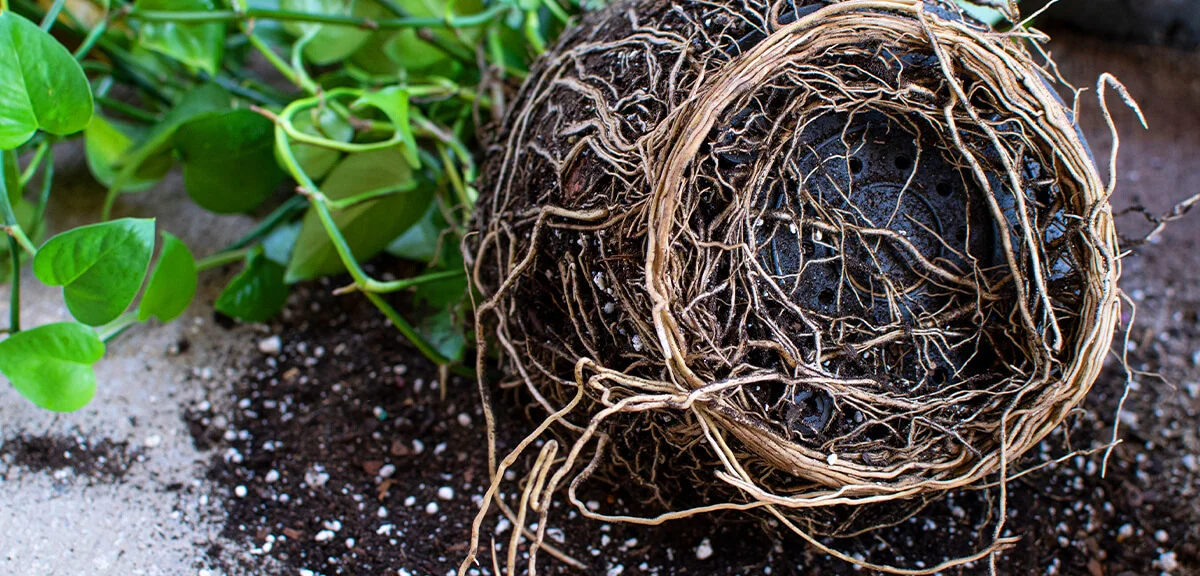
It’s time for repotting a pothos when you see roots coming out of drainage holes or if the soil is pushing up the pot's edges. This is usually done every year or two. Repot in the spring or early summer when the plant is actively growing.
Go up one pot size (2”), adding fresh potting mix to fill the pot each time. It is important to use a potting mix that allows for proper porosity, good water retention and a correct fertilizer charge, like Schultz Potting Soil Plus.
Trimming a pothos
Because a pothos plant grows so quickly, it can develop a sparse or leggy appearance. Occasional trimming would improve its shape. Take this opportunity to cut out any dead or yellowing leaves and their stems.
Pruning pothos will create a bushier plant, you can also cut back the vines or pinch off the growth tips. It is possible to simply stick your cuttings directly back in some bare spots in the pot to help volumize, but you’ll have to ensure that you keep the soil moist to get new roots established on the cuttings.
How to propagate pothos cutting
If you want to start a new plant from cuttings, the pothos plant is probably the easiest of all houseplants to propagate. They can grow new roots in 3-4 weeks. You simply have to take a cutting that is about 5-8 cm (2-3”) long by cutting just below a node (where a leaf is attached to the stem). Make sure that you have at least one leaf attached on a healthy stem section. Make a clean cut with pruners or scissors.
Place the cutting either in water or in a moist potting mix. Both give excellent results.
water propagate pothos
- Place the cutting in a clear jar with an inch or two of water.
- Place the jar in bright light and top up the water regularly. You should change the water every week.
- After a few weeks, you will see some roots developing.
- Once roots are 1 to 2 inches long, transplant the cutting into a pot with fresh potting mix. Water deeply and place in bright light.
Propagating pothos in soil
- Instead of water, you can also propagate in a good potting mix.
- Instead of placing the cutting in water, insert it into a pot filled with well-draining potting soil. Use a pot with drainage holes.
- Firm the potting mix to keep the cutting upright. Place in a warm location with bright light but no direct sun.
- After a few weeks, begin checking for root growth by tugging gently on the cutting. If you feel some resistance, then the roots are forming.
For more information on how to propagate plants, read our article.
Pothos vine with no leaves: how can I fix my leggy pothos?
To make the plant look fuller, repotting time is a great opportunity to plant fresh cuttings in the pot or pinning live branch sections into the bare areas of soil.
Another trick is to “basket” the vines without cutting. What you do is wrap vine stems in the soil so that they go in a circle around the interior of the pot around the mother plant. Place the stem nodes on top of the soil and pin them down on the potting mix with the aid of a bobby pin or paper clip. The idea is to ensure that the vine stem and node are in contact with the potting mix. The nodes will produce new roots. The result is a fuller-looking pothos plant.
Pothos toxicity
Pothos can cause intense irritation, swelling, drooling, vomiting and difficulty swallowing if chewed or ingested. It's rarely fatal but requires prompt veterinary/medical attention for symptoms. Keep pothos out of reach of pets and children to prevent accidental poisoning.

What are the common problems with pothos?
Pests on pothos
Pothos plants may be visited by insects from nearby plants, such as mealybugs, fungus gnats, aphids, spider mites and scale. Most of these insects are encouraged if you are overwatering.
Use a soft, damp cloth to lightly clean the leaves of sucking pests and treat with Schultz Indoor Insecticidal Soap. Fungus gnats lay their eggs in overly damp soil. While the adults can be sprayed with insecticidal soap, the hatching eggs can be controlled by letting the soil dry out.
Pothos leaf turned yellow
Yellowing leaves are usually a symptom of overwatering. Let the potting mix dry out. Wait until the top 1 or 2 inches of soil are dry before watering. You can also try to move your plant to a brighter location where it will receive indirect light.
Remove any unsightly leaves with a clean tool.
Pothos leaves brown edges
Brown leaves can be caused by several different factors: too much harsh sunlight (pothos sunburst), overwatering or too little light. Adjust your watering schedule or move to a better location.
